
Guide
Breakroom and locker room cleaning for Modesto plants that run in shifts
At a Ceres packing house or a Stockton distribution center, the breakroom and locker area take their hardest use in the minutes when one crew clocks out and the next clocks in. Here is how to place cleaning around those minutes, around production runs and around planned shutdowns, with your facility’s own protocols setting the rules.
Map the day around people, not the production line
A Turlock food plant running two production shifts and a Manteca warehouse with one day crew use their support rooms in very different patterns, even when the rooms look alike on a floor plan. The breakroom fills at meal breaks, the locker area crowds at clock-in and clock-out, and the front office keeps ordinary weekday hours however late the floor runs.
Start by writing down when each crew arrives, eats, hands over and leaves. A restroom shared by two crews goes through soap and towels much faster than one used by a single team, so its restocking follows headcount rather than the calendar. The same goes for breakroom bins, which fill fastest after the longest break of the shift.
With the pattern on paper, recurring visits land in the gaps: after the last crew leaves for the night, or in the quiet stretch between handovers. Our industrial and warehouse cleaning covers floors, employee rooms and other building areas on that kind of schedule.
What each support room needs on a visit
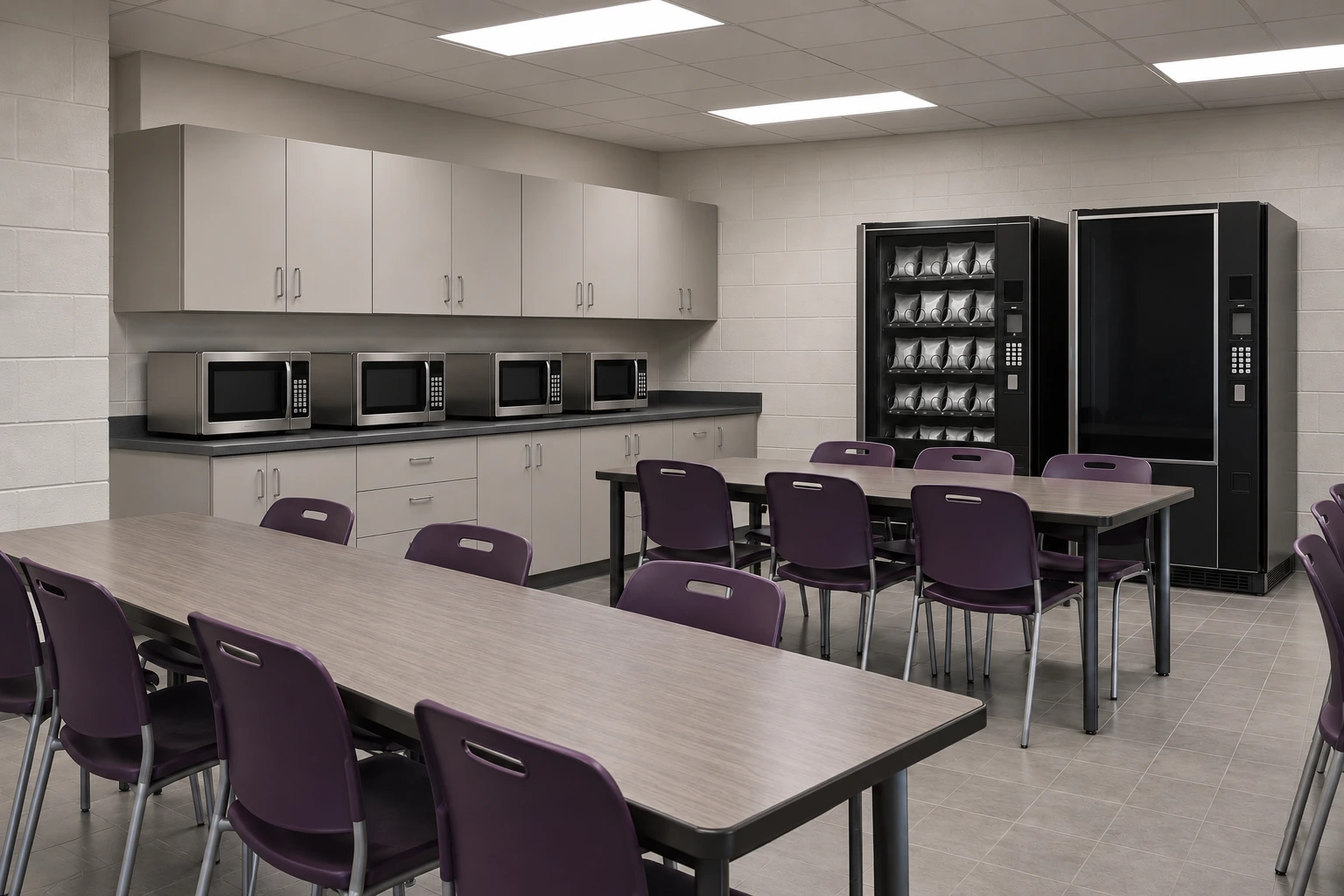
Breakrooms in working buildings collect more than crumbs. Hands come straight off the line or the dock, lunches get reheated in a rush, and packaging piles up beside the bins. A visit empties trash and recycling, wipes tables, counters and appliance fronts, cleans the sink, and cleans the floor under and around the tables where grit gathers.
Locker areas and restrooms take the traffic at the start and end of each shift. Crews clean benches, locker fronts, floors, restroom fixtures and mirrors, and refill dispensers from our supplies or your own stock, so the incoming crew never walks into an empty towel holder.
Front offices, shipping desks and the lobby where drivers and visitors sign in follow an office routine instead: the surfaces you include, entry glass, the restroom and the floor. These rooms often keep daytime hours while the plant side runs into the night, so they can sit on a visit pattern of their own.
Working around production runs
During a run, the production floor belongs to your team. Support-space cleaning is planned so the crew never crosses an active line or blocks a forklift aisle: routes follow the corridors and doors your safety lead approves, and carts stay out of marked traffic lanes.
In food plants, the rules for hairnets, footwear, handwashing and doors that open onto production rooms apply to the cleaning crew exactly as they apply to your employees. Those rules go into the task list before the first visit. Production rooms and the food-contact surfaces in them belong under food manufacturing cleaning, which follows your sanitation procedures.
Seasonal runs change the picture across the valley. When harvest brings extra crews onto a packing line, the breakroom and restrooms need more frequent attention for those weeks, and the schedule steps back once the season winds down. Planning that shift before peak season keeps support rooms from falling behind in the busiest stretch.
Shutdowns are the window for deeper work
A planned shutdown leaves support rooms empty for a stretch, which makes it the right moment for work that cannot happen around people: scrubbing locker-room and breakroom floors, cleaning behind appliances and lockers, and washing walls and partitions that collect splash and dust over months of shifts.
With the line down, machines can be cleaned in that same window. Industrial equipment exterior cleaning takes care of housings, frames and base areas once your team has shut down and released each machine, and the support-room work runs alongside it so the whole building restarts clean.
Book shutdown work as soon as the dates are set. A shared list of planned downtime lets the crew sequence the rooms, line up any extra supplies and finish before your team begins the restart.
Keeping the plan steady across crews and seasons
A task list for each support room keeps visits consistent whichever shift is running. It names the rooms, the order they are cleaned in, the products your facility permits and where supplies are stored, so nothing depends on memory.
Revisit the list whenever operations change: a new shift, a reshuffled break schedule, an added locker room or another building on the property. Small adjustments made early keep the rooms from slipping during the heaviest weeks.
When daytime traffic outpaces the nightly visit, a day porter loops through breakrooms and restrooms around shift changes, restocking and clearing spills while crews come and go. Our guide to choosing between a day porter and nightly janitorial shows how to weigh the two.
A few useful answers
Quick answers
Can support rooms be cleaned while our production line is running?
Yes. Support rooms are cleaned on routes your facility approves, away from active lines and traffic lanes, and timed for the gaps between breaks.
How should cleaning change during a harvest-season surge?
Add visits or porter hours for the weeks when extra crews are on site, then return to the regular schedule once the run ends.
Who sets the safety and hygiene rules the cleaning crew follows?
Your facility does. Your PPE, sign-in, handwashing and door-access protocols are written into the task list and followed on every visit.
Can locker-room floors be scrubbed during a shutdown?
Yes. An empty shutdown window suits floor scrubbing in support rooms, and it can run alongside equipment exterior cleaning when both are planned.
Services